nasdaq, gold, silver, btc/eth — built for someone who shows up every morning for the break. the cheapest way in, the opening-range setup step by step, and what actually onboards a mexico trader. method over today's numbers.
what to actually trade at the open, cheapest-first. micros let you run the real setup at a tenth of the risk.
mnexactly one-tenth of full NQ. a 0.25-point tick is worth $0.50 and the contract is $2 per point — so a 10-point move is $20 per MNQ versus $200 on NQ. same chart, same setup, a tenth of the risk. the honest way to learn the open.
gomost active in the london–new york overlap (~13:00–17:00 GMT, mid-morning your time), supercharged by us data drops at 8:30 ET. micro gold (MGC) is the small-size route in.

sisilver moves harder and trades thinner than gold — bigger ranges, more slippage past your stop. same overlap window, but size down for the volatility.

crno opening bell — it trades 24/7, but the us morning and high-volume hours move most. for intraday, perpetual futures give leverage, and bybit is the verified mexico venue.
the repeatable method — works the same on any of the four. mark the range, wait for the close, stack filters, define your risk. levels change daily; this process doesn't.
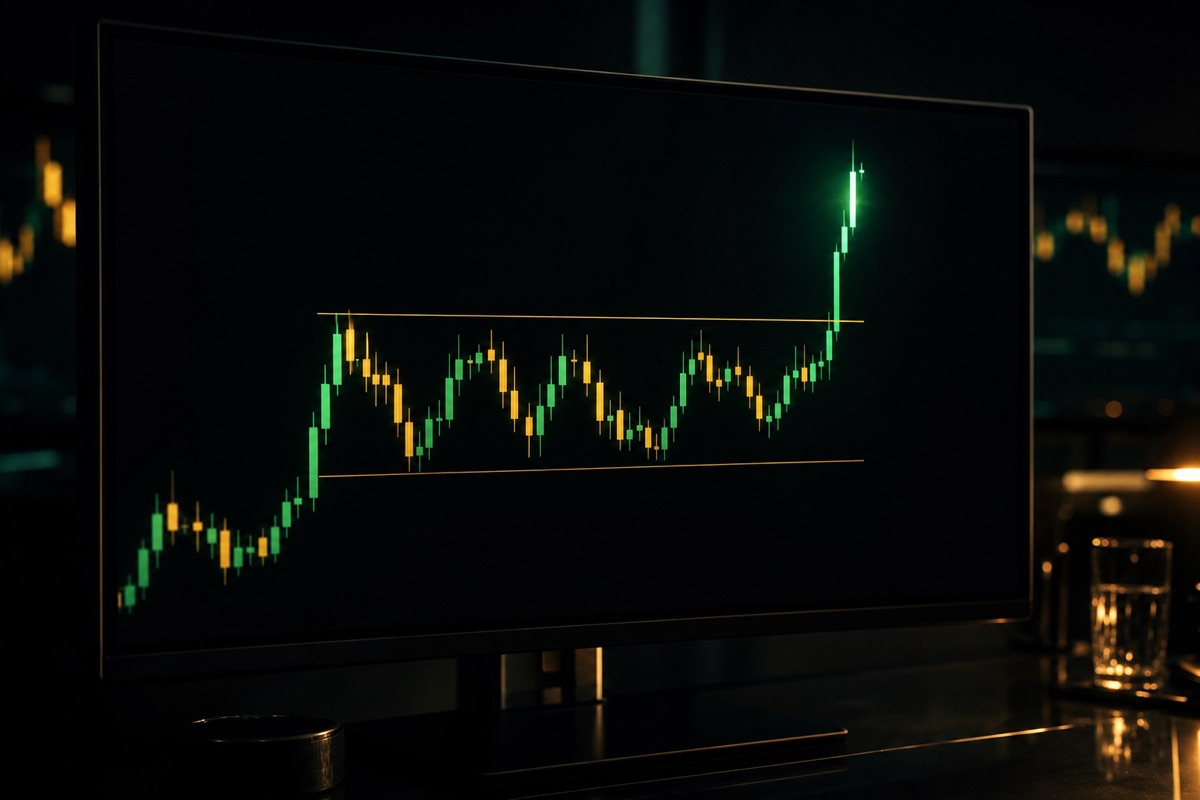
let the first 15 minutes after the 9:30 ET open print, then mark that high and low — the opening range. (5-min = aggressive scalper, 30-min = institutional; 15 is the futures sweet spot.) also flag prior-day, overnight, and pre-market highs/lows.
15-min ORenter only when a full candle CLOSES beyond the range — above the high for a long, below the low for a short. a wick that pokes through and snaps back is the fakeout / liquidity grab. let it go.
close, not wickconfirm with above-average volume on the breakout candle AND price on the right side of VWAP (above for longs, below for shorts). optional: wait for a retest of the broken level. stacking these drops the false-breakout rate sharply.
volume + VWAPstop goes on the opposite side of the range — that distance is 1R. take partial at 1–2R and trail the rest. at a 2R-winner / 1R-loser profile you're profitable even hitting only 40%.
2R : 1Rthe part most guides skip: what actually onboards a mexico resident. verified routes below.
totopstep's only hard gates are 18+ and not living in an OFAC / partner-restricted country — mexico is on neither list, so a valle resident qualifies. pass the eval, trade their capital.
bythe verified mexico crypto route: MXN deposits via SPEI and P2P (BBVA, banamex, STP), BTC/ETH perps up to 100x, 0.1% / 0.1% spot fees. mexico isn't on its restricted list.
myexplicitly lists mexico on its restricted-countries blocklist — it can't register a mexico resident. skip it so you don't burn an eval fee.
the method is solid and well-corroborated. these specifics either failed fact-check or weren't covered — chase them down before real size.
do not trade on these until you've confirmed them at the source:
intraday trading is where most accounts go to die. plainly:
the edge isn't the setup — it's risk control and repeating one boring thing daily. a 2R:1R discipline survives a 40% hit rate; revenge-sizing after a loss is what blows the account.
today's nasdaq levels are worthless next week. the opening-range process — range, close, volume + VWAP, 1R stop — is the durable part. trade the method, not the number.
prop-firm and exchange country lists shift constantly (myfundedfutures suspended 20+ countries in waves). re-verify topstep + bybit eligibility the day you sign up.
this is a researched field guide, not a recommendation to trade. size tiny, set a hard daily loss limit, and treat the first months as tuition.
the honest path: months on MNQ in a sim trading one setup — the 15-minute opening-range break — with a hard daily loss limit. when it's consistently green, a topstep eval for futures and bybit for crypto. the method is simple; the discipline is the entire game.